
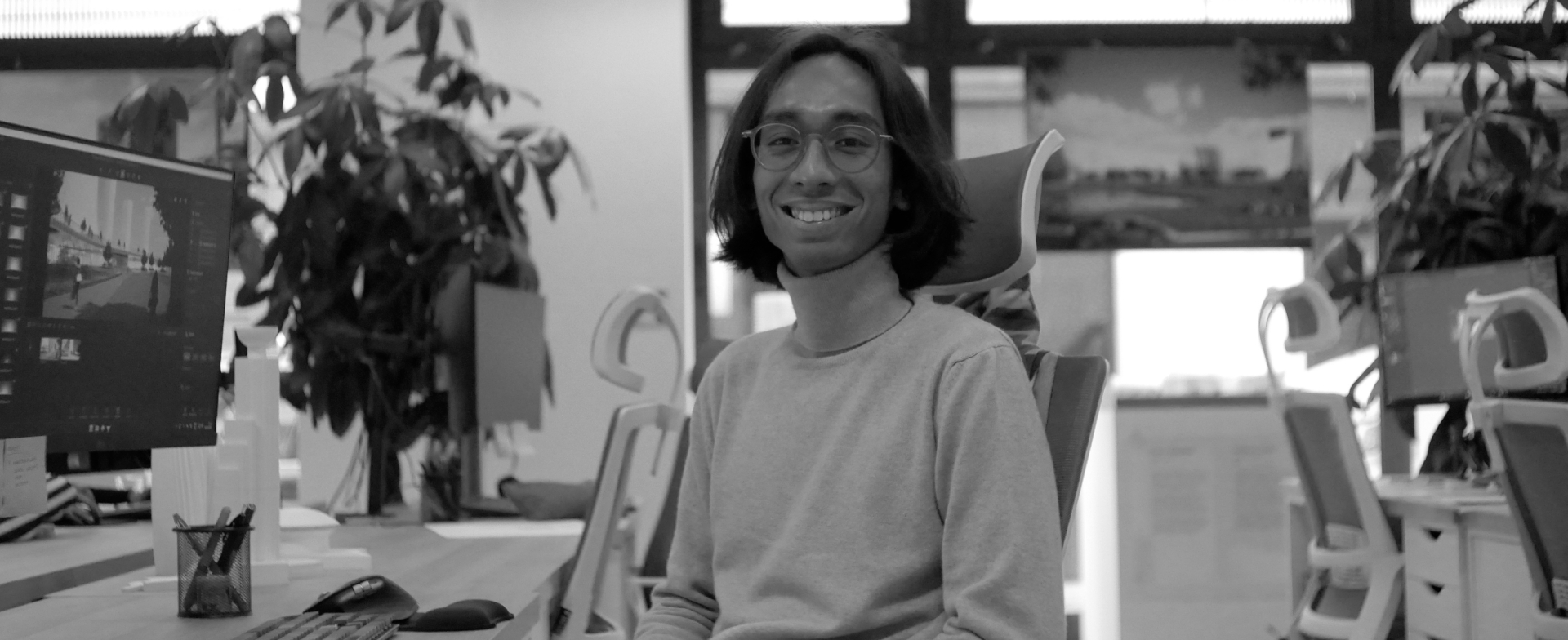

Can you describe a moment in your daily studio work when architecture feels most “real” to you – not theoretical, but tangible?
Working as an architect without a proper grasp in architectural theories would be unwise, while dwelling in the theories too much will produce nothing but a mere utopian dream. RMJM is a place where both worlds meet; for me, daily work in the studio will always be a place where theories become reality – at least the architectural theories and realities as I know them – it becomes the proving ground for my ability to apply the knowledge that I have gathered during my days as an architecture student.
Here, I meet with diverse people of diverse backgrounds: people with diverse upbringings, diverse approaches, diverse interests, diverse expertise, diverse experiences. Here, I learn how to listen and how to broaden my perspective: I learn to see design from different points of views, I learn how to approach design in different ways, I learn how to solve its problems with many different tools. Daily work in the studio will always be “real” for me – it is an experience where theories will always meet practicality.
What part of a project do you feel most responsible for, even if it isn’t formally in your job description?
Coordinating, since I am confident of my skills in working in 3D. Here, we mostly take care of conceptual designs – where the free minds of architects would venture into the wild. Then, there would be the next step, a pivotal point that every project must go through. It is crucial as it decides whether an architect’s vision will manifest into a reality, or it would be left just as a sketch placed in the corner of an archive.
In this process, sketches on paper is a good start but will not be sufficient, while hi-tech solutions such as BIM are not yet needed. 2D drawings such as plans, sections, and elevations, are great tools to communicate ideas with other stakeholders in the process of design; but when trying to discuss problems in a world where design becomes more complex everyday, it could not be the only tool. On the other hand, BIM might sound like a quick solution, but the level of complexity of designs in this stage might not yet require the use of it. Thus, a (generic) 3D modelling software is used: for my case, its Rhinoceros 3D (and most of the time Grasshopper).
I would mostly end up in the “modelling department” of every project – though, at the end, it is not only translating 2D drawings into 3D objects that later will be visualized by the clients. Modelling means coordinating. Adding one dimension to the drawings may end up opening a thousand other problematic dimensions – meaning it opens a lot of topics of discussions. I would take up both drawings and models from my colleagues, either from RMJM or from other consultants that are working for the same project, putting them together in a single file where everything can be seen and studied quickly – imagine a BIM coordinator without using BIM. Here, problems can be identified and quickly discussed, which also means that whoever is in charge of “modelling”, would be the one that is charged with the responsibility of coordinating it with all the others – in most of the cases in our office, I am, with the help of our project manager.
How do you approach learning when you’re exposed to unfamiliar project typologies or regions within RMJM’s global portfolio?
Learning is an innate nature for us as humans – more so in the field of architecture. Architecture touches our life in a very intimate way, it is a product of culture. One must not take the profession lightly to be a good architect, but everyone will always have their first time facing unfamiliar projects. Thus, for me, when faced with unfamiliar territories, deep research is a must. Of course it would not be a quick five minute read on an article in Wikipedia. Materials can be gathered from many sources: books, research papers, documentaries, and even colleagues.
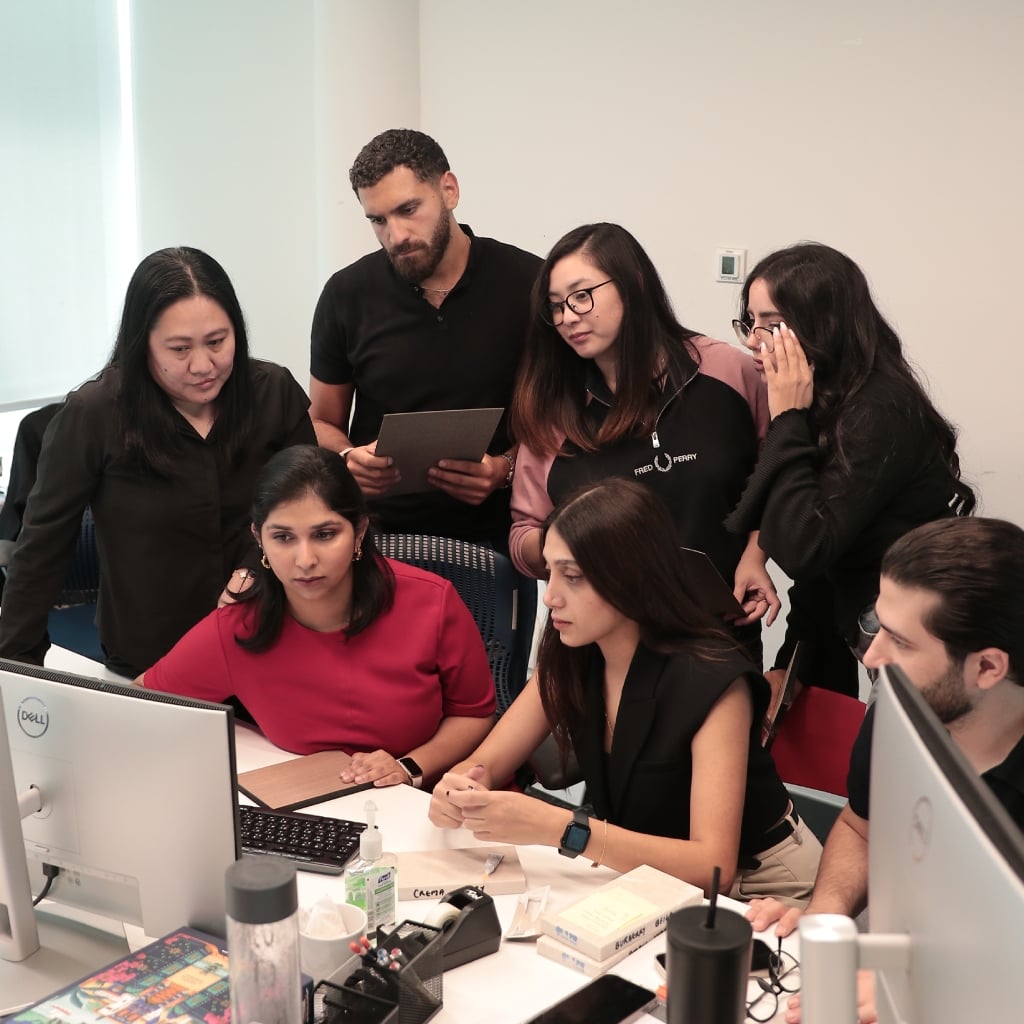
Since our office is made out of a team with diverse backgrounds, strong capabilities, and different specialities, it is one of the frontiers of my learning. Someone might be more versed in one topic, while others in some other. Discussions become a fun way to open up new knowledge in facing new projects. Sitting together to discuss ideas and exchange opinions is what we always do every time we start a project – even more along the way. I am blessed in this office with supportive colleagues that have the patience and the willingness to learn together, to explore something new together.
What is one assumption about architectural practice that changed for you after joining a large international studio?
That it can also feel small and intimate.
How do you balance precision and creativity when working under tight timelines or technical constraints?
Precision and creativity are two elements that will always be required at our work; they cannot be compromised as we are architects. Tight timelines, technical constraints, or any other restrictions that we have in our job on the other hand, can be solved quite simply by setting our priorities correctly.
We, as architects, are trained as problem solvers; we also work with other amazing people from many disciplines; thus, the problem of technicality can be resolved by moving forward together, hand in hand, as long as we are trying to achieve something realistic. Tight timelines may be more familiar in today’s time: where the pace of the world keeps getting faster, and the demand of producing something of high quality in the shortest time possible; thus, the need of good time management, an efficient workflow, and a smart way to solve design problems is needed.
One other important aspect that is oftentimes forgotten is the need of having clear visions: it is influential in breaking down big and complicated problems into small, discrete, yet concrete solutions – simplifying the equations rather than having to face it at face value. Having clear vision means having clear directions, which also means knowing how to effectively and efficiently tackle one’s challenges – while having none just means that one will be only facing confusion all along the way.
Is there a tool, workflow, or habit you’ve developed that helps you stay effective across multiple projects?
One habit that helped me many times is the habit of collecting and archiving. Working with 3D modelling software and not BIM, as I have explored in one of the previous answers, has its downsides. There are many times that I would face mundane tasks: making stairs, putting mullions on glass facades, counting GFAs, extracting plans from building volumes, and many more. Every time I face these kinds of boring and tedious tasks, I always try to find a way to “avoid” it. Some call it laziness – which I also agree – but I think it is the best way to stay on top of my games.
If I can do it within a couple of clicks, why should I spend all my afternoon doing it? In every opportunities that I have, I would create a quick and simple script in Grasshopper to help me do these boring and repetitive tasks – why would anybody wants to do it manually if you can set up an automation in a couple of minutes that would help you cut off the time required to do a task by a huge margin? I think of it as if I am trying to BIM-ify a 3D modelling software, where I can cut the effort needed to do something, so I can invest it in something else. I collect and archived these scripts in a very accessible place on our office’s server, so that I can always use it whenever needed. I also made sure that it is easily accessible by colleagues in case they would need it – so that they can also avoid wasting their time in doing their work, which would also most probably be my work, our work.
In the past couple of projects, my collection of scripts – I can even call it “plugins” even – has saved me countless unnecessary works. Even now, it is still growing as I am working on multiple other new projects, and I am very happy to be faced with the opportunity to expand my collections even further. For me, there is always a fine line between being “lazy” and staying effective – which I love to play in between. Again, why would I have to do ArrayCrv on singular surfaces to model mullions when I can select multiple of them, set its profiles and dimensions, and do it in one click?
What does collaboration mean to you in practice – beyond meetings and coordination?
It means working together for the same goal. Meetings and coordination might sometimes be fun and interesting, some other times it might be heavy and unstimulating, but it is fundamental in collaboration. Let us not be taken away by the architect’s ego, feeling that we can achieve everything on our own. Working on something big and ambitious, such as RMJM’s projects, cannot be done alone. We need to work together to achieve something big – we are meant to. To work together means to respect and have the will to understand others, to share a vision, to share a common goal. To collaborate is to learn, so that we can grow – both as a professional, and as personal.