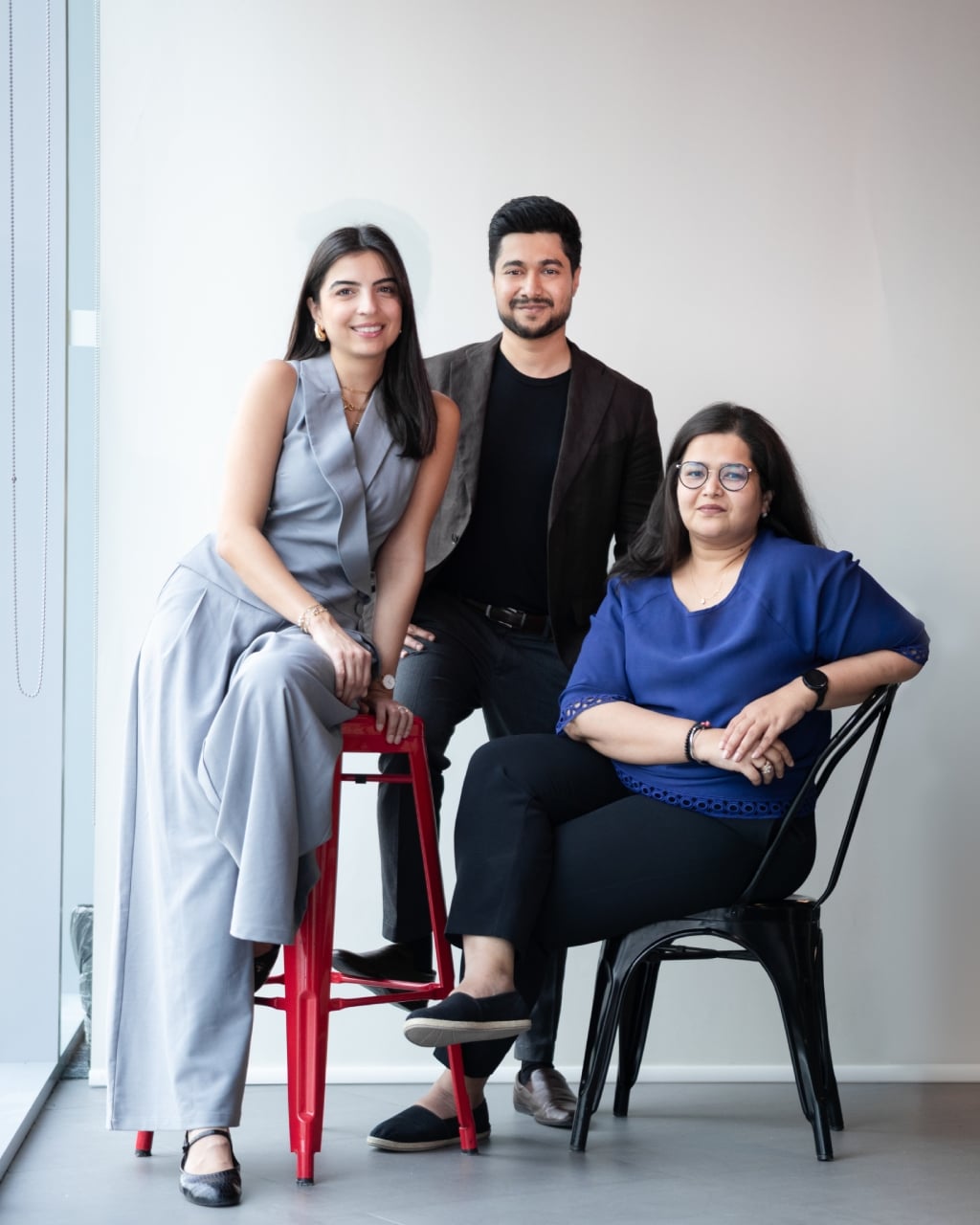
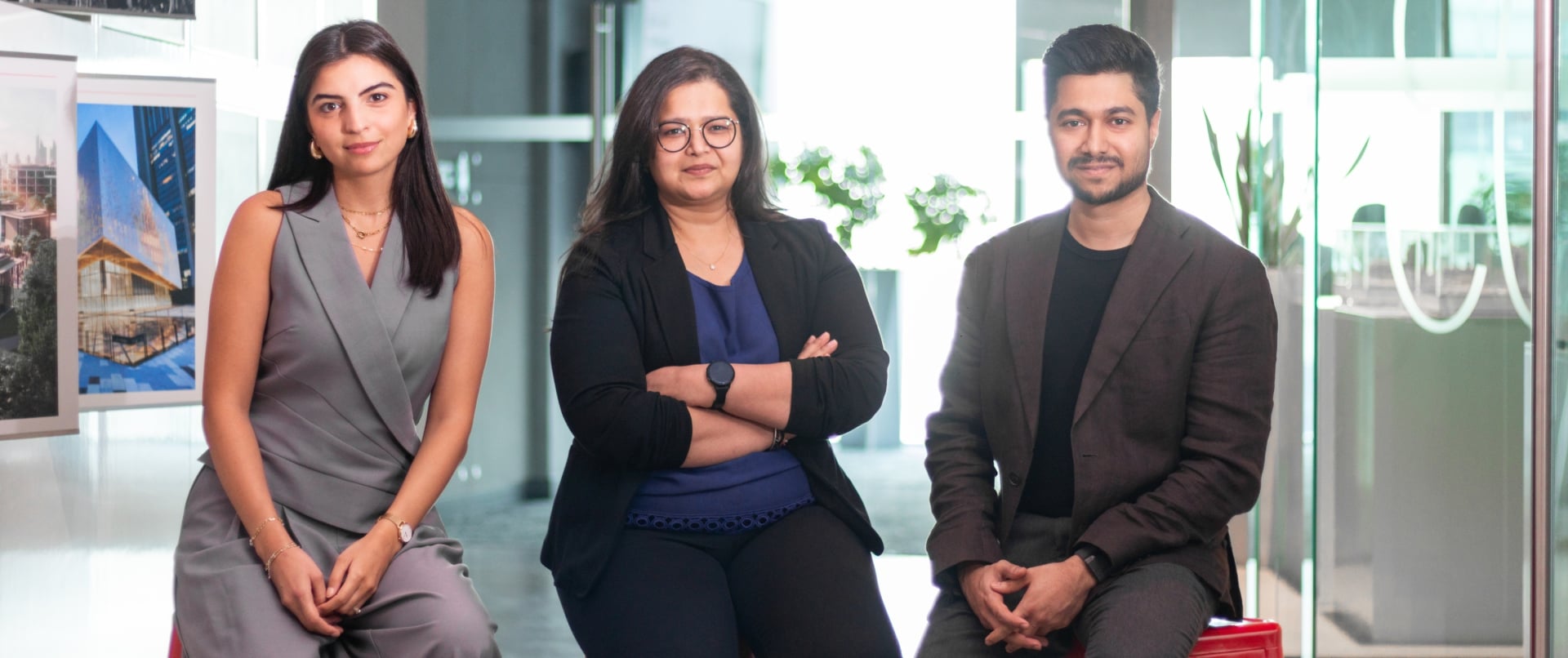

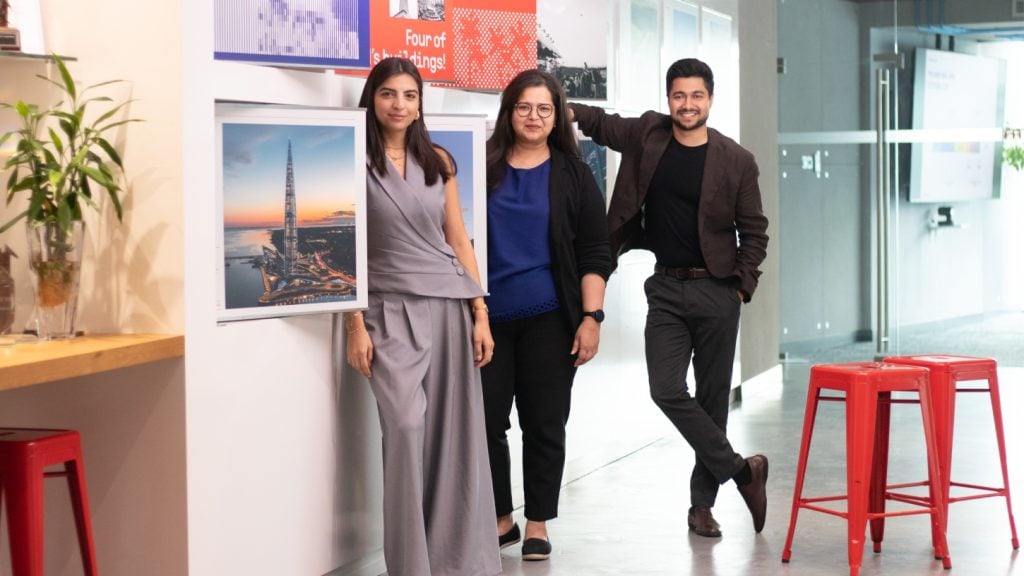
In this interview, RMJM Associates Hrishikesh Borse, Sima Mounla, and Foram Gharekhan reflect on how their personal design philosophies have been shaped by hospitality, residential, waterfront, entertainment, mixed-use, and large-scale urban projects. Their perspectives highlight a shared belief that architecture is not only about form, but about creating meaningful experiences, connected communities, and spaces that respond to the way people live, move, and interact.
The discussion also explores the evolving role of the architect as a collaborator, leader, and strategic problem-solver. From multidisciplinary coordination and client expectations to the influence of travel, cities, human behaviour, and AI, the interview offers insight into how RMJM’s Associates approach design as a balance between vision, practicality, creativity, and long-term value.
1. RMJM’s portfolio spans hospitality, residential, mixed-use, and large-scale urban projects. Which project in your career best represents your personal design philosophy, and why?
Hrishikesh Borse (H): I have always been drawn towards hospitality and residential projects because they are fundamentally about creating experiences and spaces that people connect with. Hospitality and Residential projects comes with a canvas to create well-balanced environments to enhance the user living experience.
Sima Mounla (S): Nice! for me personally, waterfront and entertainment projects. I am more of a big picture person and enjoy working on large masterplans. Entertainment projects usually give architects the freedom in terms of form and design, just as waterfront projects do in addition to incredible views they allow the architects to merge design with nature resulting in interesting forms.
Foram Gharekhan (F): I would say mixed-use and large-scale urban projects best represent my personal design philosophy. What interests me most is the complexity of bringing together different uses, users and movement patterns into one coherent environment.
For me, good design needs to balance a strong overall vision with practical realities—commercial performance, functionality, buildability and long-term adaptability. I enjoy working at that intersection, where architecture can create a clear identity for a development while also contributing to a more connected and liveable urban fabric.
2. Across your experience, how has the role of the architect evolved from pure design author to multidisciplinary collaborator and strategic problem-solver?
S: It started to shift naturally, as a junior you’re speaking to colleagues and suppliers and slowly you start to coordinate with other consultants and disciplines until you reach the stage where you can “problem solve” with clients and contractors. It’s even better if you like people and being social it just becomes a large party of friends on a project
F: I agree. An architect’s role has become much broader than being the sole author of a design idea. While design remains at the centre, the real value now lies in connecting different perspectives—client aspirations, commercial objectives, technical requirements, programme pressures and the needs of end users.
Architects need to understand enough about every discipline to ask the right questions and help the team make informed decisions. We often become the link between the vision and its delivery, So, while the role is much more collaborative today, it has also become more strategic.
H: I think the transition is a natural part of the journey as an architect. You begin to see every challenge as an opportunity to find better solutions. The role gradually shifts from being only a designer to becoming someone who connects different disciplines, solves problems, and helps guide the project towards a successful outcome.
3. Hospitality and residential projects today are increasingly experience-driven. What do clients and end-users expect from spaces now that they did not expect five years ago?
F: People now expect spaces to offer more than their primary function. A home is no longer only a place to live, and a hotel is no longer only a place to stay. End-users are looking for a complete experience—spaces that support wellbeing, social interaction, flexibility and a sense of belonging.
People are more willing to extend their living environment beyond their front door—using lounges, co-working areas, fitness spaces, terraces and social facilities as part of their everyday lifestyle. The challenge is to make these shared spaces feel genuinely useful and inviting, rather than simply adding them as a checklist.
For clients, this means that the quality of the shared spaces, amenities and arrival experience has become just as important as the individual apartment or hotel room. The design needs to create value through the whole journey, from the first impression through to the everyday use of the space.
H: Today, there is a clear shift where residential projects are adopting many qualities that were traditionally associated with hospitality. Homes are no longer viewed only as places to live; they are becoming lifestyle destinations. Users expect more from their environments — thoughtful amenities, landscape integration, wellness, community spaces, and a stronger sense of experience. Clients are looking to create spaces that go beyond the basic function of a home and provide an environment that enhances the way people live every day.
S: I agree, I believe covid really started to shift how people in general use spaces and client’s expectations. Before we would see patterns of large private apartments, now we’re seeing smaller apartments with amazing amenities in shared spaces
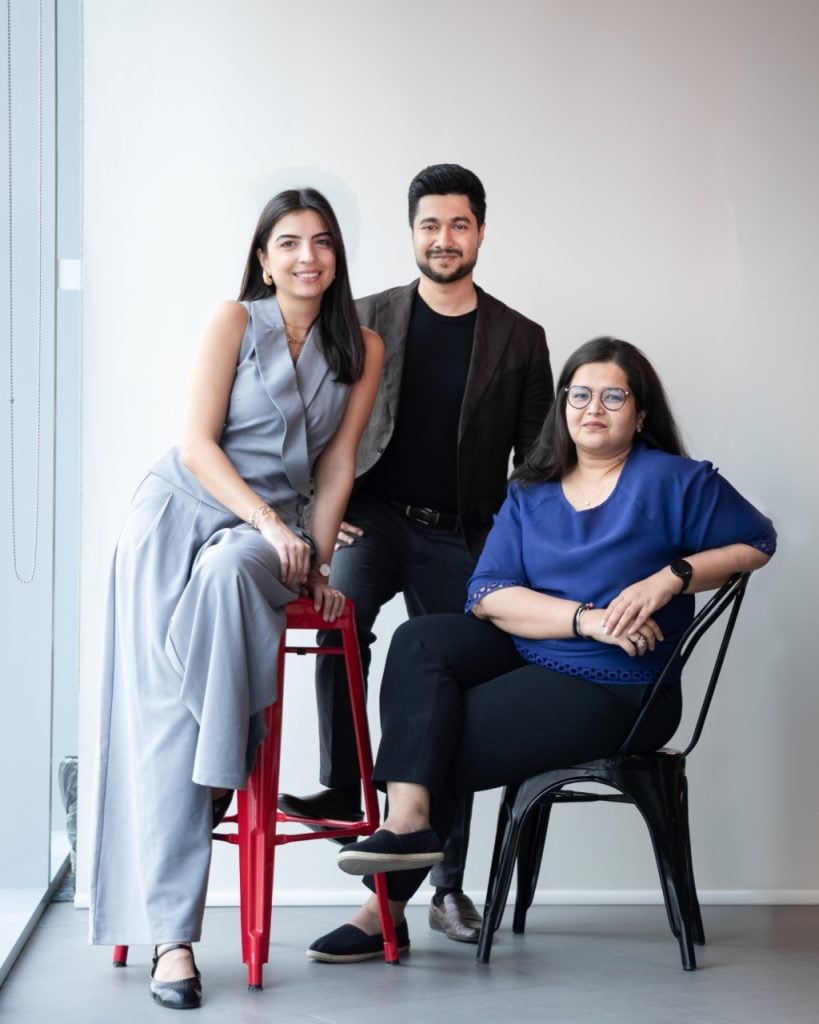
4. Looking back at your early years in the industry compared to your current role as Associates, what do you think has been the biggest shift in your approach to leadership, collaboration, and project delivery?
F: The biggest shift for me has been moving from focusing mainly on my own scope of work to taking greater responsibility for the wider team, the client relationship and the overall delivery of the project. Earlier in my career, success was often about producing good design work and resolving the tasks in front of me. As an Associate, it is also about creating clarity for others—setting direction, anticipating issues and helping the team stay aligned through a complex process.
Leadership is not only about making decisions; it is also about understanding the people you are working with, building confidence within the team and adapting how you communicate with different stakeholders. That is what helps translate a strong design vision into a coordinated and deliverable outcome.
S: You have to be able to read people and the room. Our work depends heavily on people and their personalities come into play a lot especially the team you are working with on a daily basis. Another factor is how to present to clients it comes a lot from understanding the vibe of the situation and their personalities either as an entity or as individuals
H: The biggest change has been developing a more holistic approach towards projects. Earlier, the focus was primarily on design, but with experience you start looking beyond the design itself — understanding constructability, cost, programme, client expectations, and overall project delivery.
5. RMJM often places architects in highly collaborative and multidisciplinary environments. How has working within this structure helped shape your design philosophy and ability to manage complex projects?
S: It goes back to the previous question where it helps us understand humans more and situations. It’s not always easy but it’s definitely interesting. And RMJM’s process helps us navigate through this in a safe environment
F: Working in a highly collaborative and multidisciplinary environment has strengthened my belief that good design is never created in isolation. It is shaped through dialogue—between architecture, engineering, cost, sustainability, and the client’s vision. RMJM’s structure encourages this constant exchange, which helps refine ideas early and avoid disconnects later in the process.
It has also reinforced the importance of clarity and coordination in my own approach. When you are working with multiple disciplines simultaneously, you learn to design with greater awareness of constraints, but also with more creativity within those boundaries. Over time, this has made my design thinking more grounded, iterative, and solution-oriented.
H: I see these multidisciplinary environments almost like continuous learning platforms. Every project brings new challenges, and working alongside different specialists helps you understand different perspectives and approaches. This has helped me become a more balanced designer and a better problem solver.
6. Finally, outside of architecture itself whether through travel, art, film, technology, or culture what most influences the way you think about design today?
H: Inspirations comes from all as you mentioned, but I would say travel has been one of the biggest influences on my approach to design. Experiencing different cities and cultures allows you to observe how spaces are planned, how people interact with them, and how architecture shapes the identity of a place.
S: I believe for me it’s always people’s behaviors, patterns, how cities function. I am a city girl through and through. I love to experience how different cities have different souls. This helps design things that relate to the human experience. Another thing is AI as a tool to assist, its it actually very interesting to see how it actually aids us as architects and how each of them behaves and thinks differently.
F: For me, it always comes back to people and cities. I really enjoy observing how people behave in everyday spaces—how they move, where they pause, what feels comfortable to them without even thinking about it. I am also very influenced by travel, especially experiencing different cities and how each one has its own character or “energy,” shaped by culture, pace of life, and how public spaces are used. It is something I naturally notice and it always feeds back into how I think about design.
Alongside that, I find AI quite interesting as it starts to become part of our process—it is changing the way we explore ideas and think, but still very much works alongside our own intuition.